
Paul Lincke
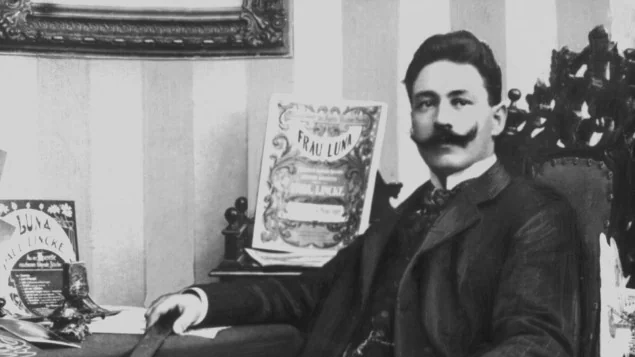
Image from Wikipedia
Image from Wikipedia
Paul Lincke – The Sound of Berlin and the Birth of the Urban Operetta
A Master of Light Music with Lasting Historical Impact
Carl Emil Paul Lincke is one of the defining names in German entertainment music. Born on November 7, 1866, in Berlin and died on September 3, 1946, in Hahnenklee-Bockswiese, he became a key figure in Berlin's operetta as a composer and theater conductor. His significance for Berlin is still compared today to that of Johann Strauss for Vienna and Jacques Offenbach for Paris. ([de.wikipedia.org](https://de.wikipedia.org/wiki/Paul_Lincke))
Lincke represents the moment when folk theater, revue, couplets, and operetta condensed into an urban soundscape. As the "father" of the Berlin operetta, he developed a signature style that was catchy, rhythmically precise, and deeply rooted in local color. With works like Frau Luna and the still identity-creating "Berliner Luft," he created melodies that reached far beyond the genre into the city's culture. ([en.wikipedia.org](https://en.wikipedia.org/wiki/Paul_Lincke))
Early Influences: Berlin, Military Music, and Craftsmanship
Lincke grew up in the Berlin milieu of the late 19th century. After the early death of his father, the family moved to different streets in Berlin, and young Paul showed musical inclinations early on, initially leaning towards military music. His education in Wittenberge made him a bassoonist; at the same time, he learned tenor horn, drums, piano, and violin – a broad instrumental practice that profoundly shaped his later work as a theater musician. ([en.wikipedia.org](https://en.wikipedia.org/wiki/Paul_Lincke))
This solid craftsmanship was crucial for his later music career. Lincke thought not only as a composer but also as a practitioner of stage operations. The ability to shape arrangements to meet the needs of the theater, the audience, and the singers became a hallmark of his artistic development. ([en.wikipedia.org](https://en.wikipedia.org/wiki/Paul_Lincke))
Breakthrough in Theater: From Bassoonist to Sought-After Conductor
Instead of pursuing a career as a military musician, Lincke began at the Central-Theater in Berlin as a bassoonist and later moved to the orchestra of the Ostend-Theater. Further stints on the Berlin stages – including the Königsstädtisches Theater, the Belle-Alliance-Theater, and the Parodie-Theater – provided him with an intensive field for entertainment music, vaudeville, and popular stage numbers. There, he accompanied musical programs and provided original compositions for popular singers. ([en.wikipedia.org](https://en.wikipedia.org/wiki/Paul_Lincke))
His first major success came in 1897 with Venus auf Erden, a revue-like one-act piece that already demonstrated his sure instinct for pointed melody and theatrical impact. However, the real breakthrough followed with his move to Paris and his return to the Apollo-Theater. With this international experience, Lincke gained new sonic perspectives without giving up his Berlin identity. ([en.wikipedia.org](https://en.wikipedia.org/wiki/Paul_Lincke))
The Triumph of Frau Luna and the Birth of a Berlin Sound
In 1899, Lincke achieved great success with Frau Luna. The operetta became a key work of Berlin's entertainment culture and is regarded as the birth moment of the Berlin operetta in its reception. It is also from this work that "Berliner Luft" originated, the piece that later became famous as the unofficial anthem of Berlin and still occupies a distinctive place in the city's collective memory. ([en.wikipedia.org](https://en.wikipedia.org/wiki/Paul_Lincke))
In the same year, Im Reiche des Indra followed, and in 1902, Lysistrata. These works illustrate how Lincke combined comedic lightness, catchy numbers, and stage-effective refrains with precise theatrical dramaturgy. The libretti by Heinrich Bolten-Baeckers complemented his music with the necessary lightness and contributed to Lincke's pieces resonating widely. ([en.wikipedia.org](https://en.wikipedia.org/wiki/Paul_Lincke))
Metropol-Theater and the Grand Revue of the Capital
In 1908, Lincke became the first conductor and composer at the Metropol-Theater, one of the most dazzling addresses of Berlin's entertainment theater. There, sumptuous staged revues, opulent orchestral colors, and spectacular stage effects came together. Lincke fit perfectly into this environment because his music mastered the balance between entertainment, precision, and urban elegance. ([en.wikipedia.org](https://en.wikipedia.org/wiki/Paul_Lincke))
His style thrived on clear melodic arcs, danceable rhythms, and a form of compositional directness that immediately captured attention. Especially in revue and operetta, his strength showed: he could musically characterize figures without sacrificing the lightness of the genre. This mixture made him the leading Berlin operetta composer of his time. ([en.wikipedia.org](https://en.wikipedia.org/wiki/Paul_Lincke))
Major Works and Discographic Impact
Lincke's operettas include among others Venus auf Erden (1897), Frau Luna (1899), Im Reiche des Indra (1899), Fräulein Loreley (1900), Lysistrata (1902), Nakiris Hochzeit, oder: Der Stern von Siam (1902), Prinzess Rosine (1905), Grigri (1911), Casanova (1913), and Ein Liebestraum (1940). This selection reveals a long creative range extending from the Imperial era to the late Nazi period. ([de.wikipedia.org](https://de.wikipedia.org/wiki/Paul_Lincke))
Beyond individual titles, it is primarily the longevity of his melodies that shapes his posthumous reputation. "Berliner Luft" became the emblematic Berlin piece, while "The Glow-Worm" from Lysistrata lived on internationally in various versions. Lincke's discography, in a broader sense, consists not only of works but also of enduring musical motifs that continue to be performed, adapted, and remembered. ([en.wikipedia.org](https://en.wikipedia.org/wiki/Paul_Lincke))
Artistic Development, Fame, and Problematic Historical Context
Lincke's career was not without its breaks. His biography encompasses personal crises, intense theater relationships, and a later phase when he received public recognition during the era of National Socialism. German biographical research points out that he was involved in cultural-political structures in the 1930s and composed the march "Unsere braunen Jungens" in 1933; at the same time, he was never a member of the NSDAP. ([de.wikipedia.org](https://de.wikipedia.org/wiki/Paul_Lincke))
This historical context is essential for a serious artist description. Lincke remains a central figure in music history, yet his reception must make visible both his musical achievements and the entanglements of his later years. EEAT means here: admiration for the work, but no repression of the contexts. ([de.wikipedia.org](https://de.wikipedia.org/wiki/Paul_Lincke))
Cultural Influence: Berlin as a Resonating Narrative
Paul Lincke shaped Berlin's self-image like few other composers of his time. Even today, honors, street names, and performances commemorate his role as the musical chronicler of the metropolis. The Paul-Lincke-Ufer, the Paul-Lincke-Platz in Hahnenklee, and the regularly held International Singing Competition for Operetta "Paul Lincke" show how present his name remains in the cultural memory. ([de.wikipedia.org](https://de.wikipedia.org/wiki/Paul_Lincke))
His work continues to live on in today's repertoire. Berliner theaters and venues repeatedly feature Frau Luna and explicitly refer to Lincke's unique position as the "father" of the Berlin operetta. This enduring presence attests to the cultural durability of his music: it is historically rooted and yet remarkably adaptable. ([berlin.de](https://www.berlin.de/en/tickets/classical-music/berlin-bleibt-doch-berlin/2026-06-05-berlin-bleibt-doch-berlin-e25d58d3-0188-478c-8d01-797f717b539c/?utm_source=openai))
Conclusion: Why Paul Lincke Continues to Fascinate Today
Paul Lincke is more than an operetta composer of the Kaiser era. He is the sound-documentarian of an urban feeling that connects Berlin to this day with charm, wit, and melody. His works combine craftsmanship precision, stage experience, and a distinctive musical identity that remains firmly anchored in the canon of German entertainment music. ([en.wikipedia.org](https://en.wikipedia.org/wiki/Paul_Lincke))
Anyone who wants to understand how the Berlin operetta developed and why "Berliner Luft" still serves as a musical lifeline for the capital cannot overlook Lincke. His music unfolds its full strength live, where theater, orchestra, and audience rediscover that blend of brilliance, nostalgia, and energy that made Lincke so successful in Berlin. ([en.wikipedia.org](https://en.wikipedia.org/wiki/Paul_Lincke))
Official Channels of Paul Lincke:
- Instagram: No official profile found
- Facebook: No official profile found
- YouTube: No official profile found
- Spotify: No official profile found
- TikTok: No official profile found