Events of the Local Scene & Influencer Meetups Koblenz
Events of the Local Scene & Influencer Meetups in Koblenz: Which Formats Can Emerge Now
How would Koblenz feel if you consistently viewed the city through the lens of the local creator scene – through reels, stories, livestreams, and spontaneous street photos at the Deutsches Eck or during the blue hour over the Rhine? And what happens when exactly those people, who usually only appear on screen, regularly come together in one room in the future – together with fans, local businesses, and curious newcomer creators?
This is exactly where events of the local scene & influencer meetups come in: They turn anonymous follower numbers into real conversations, side projects into sustainable collaborations – and can become a modern location factor for Koblenz.
Goal of this article: To give you a practical overview of which event formats make sense in Koblenz in the future, how they can be organized fairly and safely, and how residents, visitors, and local stakeholders can benefit from them.
What are Influencer Meetups & Events of the Local Scene?
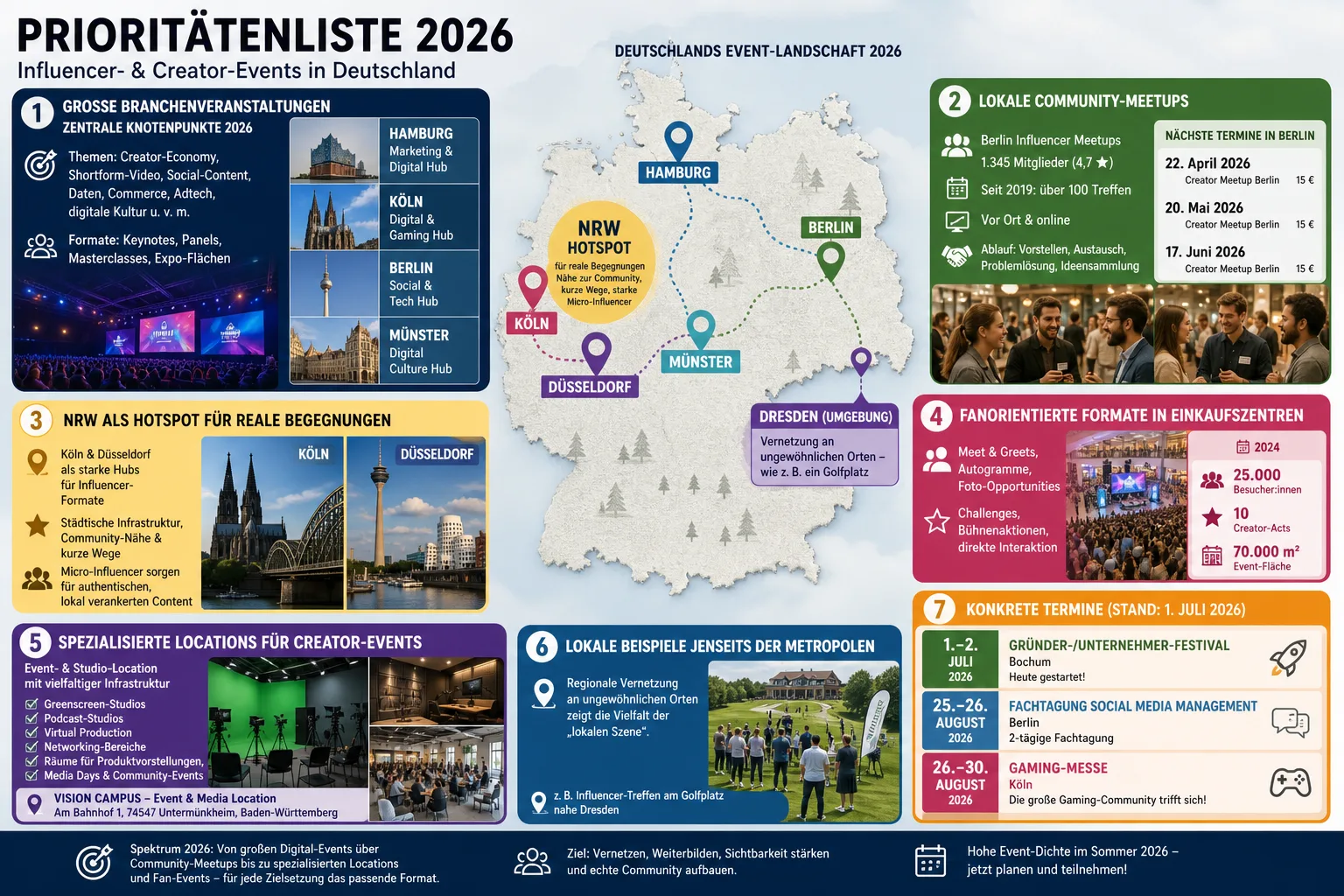
Influencer meetups are planned gatherings of creators (e.g., Instagram, TikTok, YouTube, blog, podcast), often supplemented by brands, agencies, cultural venues, or tourism partners. "Events of the local scene" does not only refer to large stage formats, but also to small meetups, photo walks, workshops, or co-working sessions – the main thing is: locally rooted, clearly organized, and with real added value.
- Creator meetups for exchange, feedback, and collaborations
- Educational formats (workshops/masterclasses) for content, strategy, technology, and law
- Fan-oriented encounters (Q&A, meet & greets) with a focus on community experience
- Hybrid formats that combine on-site and online
Why Koblenz Can Work Especially Well as a Place for Creator Events
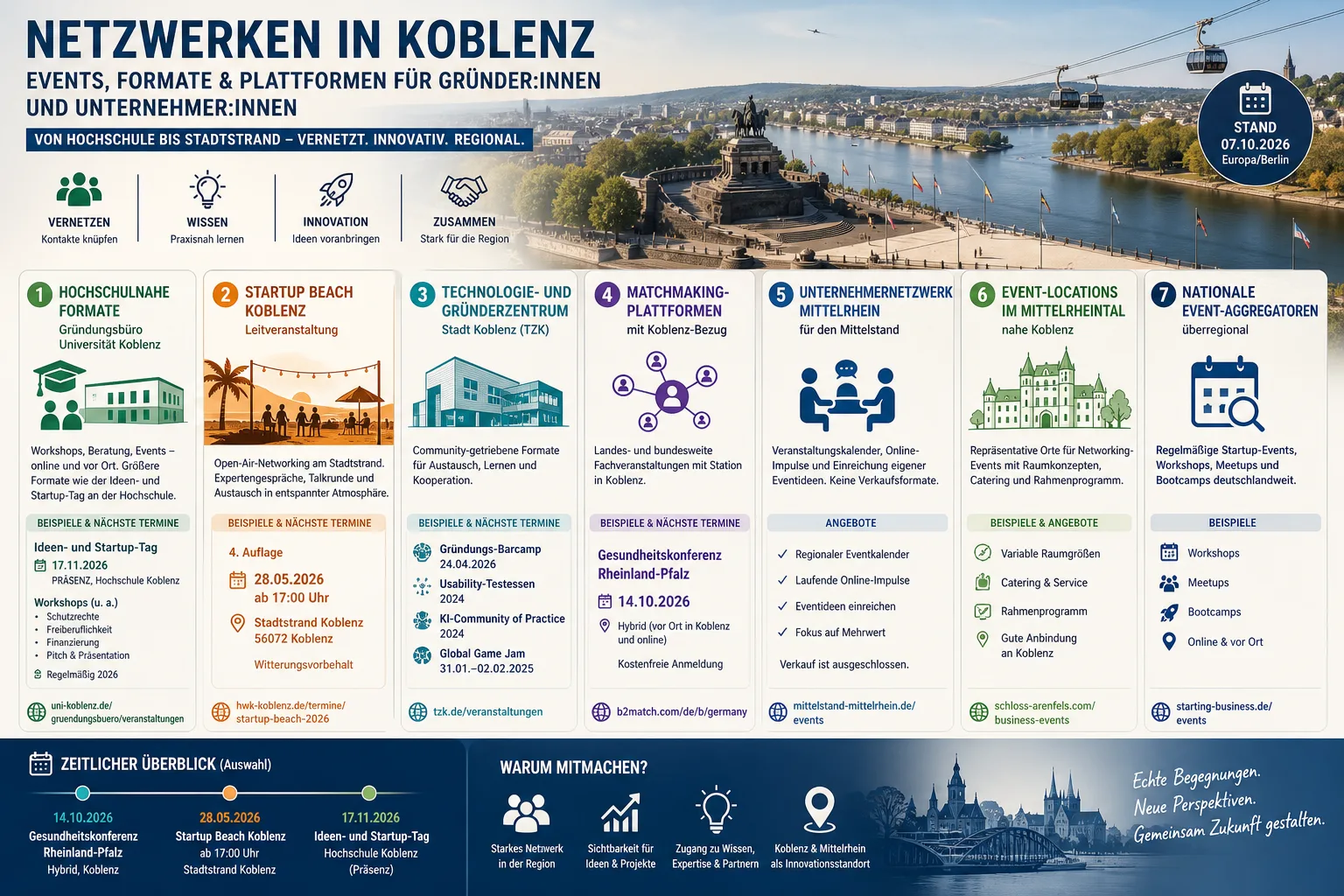
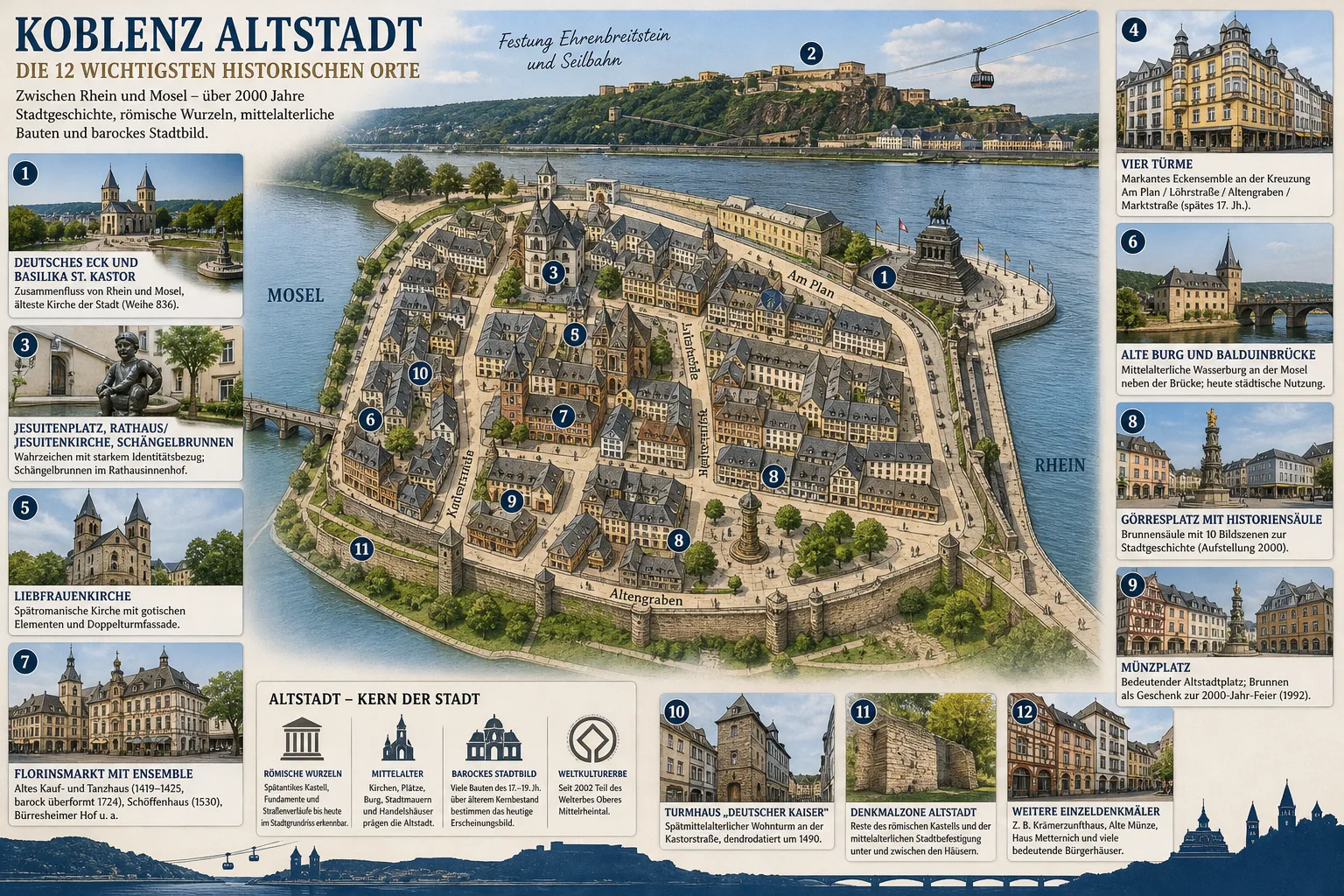
Koblenz offers a rare mix for future creator events: short distances, strong visual backdrops (Rhine, Moselle, historic axes), a mix of residents, students, and tourists – plus many places where encounters naturally occur (city center, riverside areas, cultural and gastronomy spots).
Potential for the City and the Scene
- Online becomes offline: Comments turn into conversations; this increases connection and trust.
- Low-threshold entry: Newcomers can ask questions, get feedback, and initiate first collaborations.
- Local economy benefits: Businesses can work with micro-influencers who are truly locally rooted.
- Image & location factor: Recurring creator formats can make Koblenz more visible as a modern, creative city.
Future Formats in Koblenz: From Regulars' Table to Community Event
1) Creator Meetups (regular, small to medium)
A sustainable entry point is regular meetups with a clear agenda. They work well when they are plannable (e.g., monthly), easily accessible (limited costs, understandable rules), and have reliable moderation.
- Check-in & introduction round: Who are you, which platform, which topic, what are you looking for?
- Impulse (10–20 minutes): e.g., hook strategies for shortform video, editing workflows, community management.
- Peer feedback: 2–3 volunteer profiles receive structured feedback (goal, content, consistency, call-to-action).
- Networking block: concrete cooperation offers (e.g., "Looking for photographer for reel day").
- Optional content slot: joint photo/reel – only with explicit consent.
2) Workshops & Masterclasses (learning with practical relevance)
Workshops are suitable if more professionalism is to be developed in Koblenz in the future – both among creators and local businesses planning collaborations. A good workshop design combines practical exercises with legally secure basics.
- Social content strategy: positioning, editorial planning, storytelling, series formats
- Shortform video production: lighting, sound, editing, subtitles, format tests
- Analytics & impact: which metrics are useful for what (reach vs. interaction vs. clicks)
- Collaborations & labeling: transparent advertising, briefings, contracts, usage rights
- Data protection & personality rights: filming/photographing at events, consents, house rules
3) Fan-Oriented Encounters (start small, plan cleanly)
Meet & greets, Q&A sessions, or small stage formats can also work in Koblenz in the future – if safety, process, and expectations are clear. It is crucial that a fan event does not appear "spontaneous" but is organized fairly, plannably, and respectfully.
- Q&A with local creators in a clear time window
- Mini-challenges (e.g., reel in 30 minutes) with voluntary participation
- Photo spot & content corner with clear notice of photo/video rules
- Creator stage as a program item (e.g., at cultural, sports, or city formats), if organizers actively plan it
4) Hybrid Formats (on-site + online)
Hybrid meetups can stabilize the Koblenz scene in the long term: Those who have been on site in Koblenz once can later connect online – for example, via live impulse sessions, virtual co-working times, or online feedback rounds.
- Livestream of a short lecture (with the consent of the speakers)
- Online check-ins between two in-person appointments
- Shared resources (e.g., guides on labeling, checklists, tool lists)
Trust & Quality: Guidelines for Safe, Fair, and Transparent Events
For influencer meetups in Koblenz to work sustainably in the future, organizers and participants should rely on clear standards from the start. This strengthens trust, reduces conflicts, and protects all involved.
Transparency in Advertising & Collaborations
- Clearly label advertising when content is commercially motivated or compensation is provided (money, products, invitations).
- Record briefings in writing: scope, submission formats, deadlines, usage rights, approvals (if agreed).
- Fairness in invitations: Communicate expectations (e.g., "posting is voluntary" vs. "posting is part of the compensation") clearly in advance.
Photo/Video On-Site: Consent, House Rules, Retreat Areas
- Visible notices about whether photography/filming is taking place (e.g., at the entrance, on tickets, in the event description).
- Opt-out options (e.g., marked areas without recordings or clear "no-photo" signal).
- Protection of minors: For underage participants, particularly strict consent and protection concepts are necessary.
Safety & Process
- Plan capacities realistically (location, admission, queues, sanitation, accessibility).
- Moderation for meetups: clear times, conversation rules, respectful interaction.
- Code of Conduct: Zero tolerance for harassment; clear contact persons and escalation paths.
How Residents, Visitors, and Local Stakeholders Can Benefit
For Residents
- Participate instead of just watching: Open meetups and beginner workshops lower barriers.
- New perspectives: Photo walks or themed routes (architecture, cafés, viewpoints) can create new perspectives on Koblenz in the future.
- Community & projects: Meetings can lead to joint productions, club or cultural collaborations.
For Visitors
- Authentic tips through local creator formats and themed community events.
- Connections on site through public program items (e.g., Q&A, photo walk, mini-workshop).
- Digital extension through hybrid offers: Those who visit Koblenz can stay connected online later.
For Local Economy, Culture & Organizations
- Collaborations with micro-influencers who credibly reach target groups in Koblenz and the region.
- Host role (location/program) as visible commitment to the local creative scene.
- Employer branding through formats that demonstrate modern communication skills.
How You Can Get Involved in Koblenz in the Future
Whether you already have reach, are just starting out, or simply find social media exciting: You can help build the local scene – without perfection, but with reliability.
- Look out for open formats: Watch for creator meetups, social media regulars' tables, photo walks, marketing events, or workshops in Koblenz and the surrounding area.
- Suggest a small format: A regular meetup with 10–20 people is often the most stable starting point.
- Start with clear rules: Communicate topic, process, admission, photo/video rules, costs, and contact persons transparently.
- Approach cooperation partners specifically: Co-working spaces, cultural venues, clubs, and local businesses often benefit from plannable, well-moderated formats.
- Quality over hype: Recurring meetings with good moderation are usually more valuable than a one-off large event without structure.