
Lukas Bärfuss
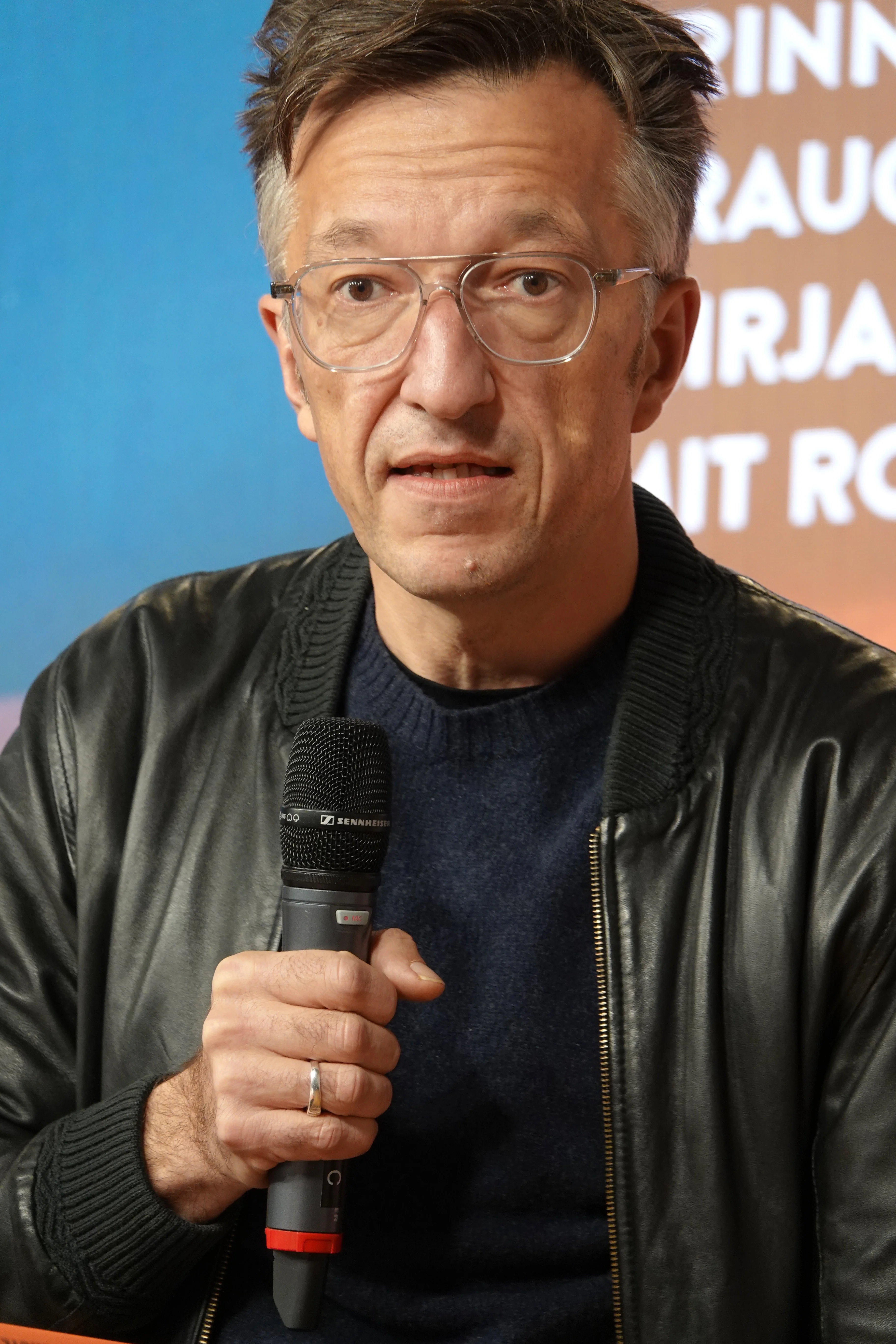
Image from Wikipedia
Image from Wikipedia
Lukas Bärfuss – The Power of Language, Intensity of Theater, and Literary Impact from Switzerland
An author who brings conflicts, contemporary issues, and moral questions to the stage and in books with rare sharpness
Lukas Bärfuss, born on December 30, 1971, in Thun, is among the defining Swiss writers, playwrights, theater directors, and dramaturges of the present day. His work combines literary precision with a political attitude and a clear observational talent for societal tensions, familial fractures, and existential boundaries. His plays are performed worldwide, his novels translated into numerous languages, and his name represents literature that does not merely tell stories but sharpens, questions, and stirs. ([de.wikipedia.org](https://de.wikipedia.org/wiki/Lukas_B%C3%A4rfuss?utm_source=openai))
Biography: Origins, Language, and the Path to Literature
The biographical foundations of Lukas Bärfuss are closely linked to Switzerland and a deeply reflective contemporary literature. Growing up in Thun, he evolved into an authorial figure who masters theater, prose, and essays equally and imprints a distinct personal signature on all three forms. The official short biography describes him as a dramatist, novelist, essayist, and dramaturge, thus as an author who is not confined to one genre but adapts the literary form to the respective subject matter. ([lukasbaerfuss.ch](https://www.lukasbaerfuss.ch/perch/resources/kurzbiowebsite.pdf?utm_source=openai))
Bärfuss gained early attention for his dramatic work. In 2003, he was awarded the Best Young Playwright for The Sexual Neuroses of Our Parents, and in 2005, he received the Mülheimer Playwright Award for The Bus. These early honors mark not only the beginning of a significant musical career — rather, that of an extraordinary literary journey — but also the moment when Bärfuss became visible as a distinctive voice in contemporary theater. Since then, his themes have revolved around power, guilt, vulnerability, and the disruptive moments in seemingly orderly everyday life. ([lukasbaerfuss.ch](https://www.lukasbaerfuss.ch/perch/resources/kurzbiowebsite.pdf?utm_source=openai))
Career: From Young Playwright to Authority of German-Language Literature
Bärfuss's career is marked by a continuous broadening of his literary radius. In addition to plays, he has produced novels, stories, and essays that further solidify his authority in the German-speaking literary scene. In 2013, he received the Berlin Literature Prize, in 2014 the Swiss Book Prize for Koala, in 2015 the Nicolas Born Prize, and in 2019 the Georg Büchner Prize. With these accolades, he was ultimately recognized as one of the most important voices in contemporary literature. ([lukasbaerfuss.ch](https://www.lukasbaerfuss.ch/perch/resources/kurzbiowebsite.pdf?utm_source=openai))
The official website documents his ongoing presence on stages, readings, discussion formats, and academic contexts. Current dates include lectures, readings, discussions, and theater works, including projects like Queen of the Night, The Crumb of Bread, The Journey, and various talk and reading formats in 2024, 2025, and 2026. This shows: Bärfuss is not an author of a closed canon, but one whose work continuously evolves in the public sphere. ([lukasbaerfuss.ch](https://www.lukasbaerfuss.ch/?utm_source=openai))
Important Works: Plays, Novels, and Stories with Great Range
Central works by Lukas Bärfuss include early texts for the theater such as The Journey of Klaus and Edith Through the Shaft to the Center of the Earth (2001), The Bus (The Stuff of a Saint) (2005), and The Sexual Neuroses of Our Parents, as well as later novels and stories. His official works page also lists Koala (2014), Malinois (2019), Father's Box (2022), The Crumb of Bread (2023), and A Story about Inheritance (2022). This range makes clear how consistently Bärfuss shifts between dramatic condensation and prosaic reflection. ([lukasbaerfuss.ch](https://www.lukasbaerfuss.ch/werke/?utm_source=openai))
In his more recent texts, the focus shifts more strongly to familial and societal entanglements. Koala links personal experience with a story about loss and origin, while Father's Box and The Crumb of Bread literary sharpen questions of inheritance, responsibility, and social status. These themes do not serve as mere decoration but are existential: Bärfuss writes literature as a precise examination of relationships, classes, memory, and moral self-examination. ([lukasbaerfuss.ch](https://www.lukasbaerfuss.ch/perch/resources/kurzbiowebsite.pdf?utm_source=openai))
Style and Signature: Precision, Tension, and Existential Sharpness
The German Academy for Language and Literature describes Bärfuss's work as characterized by high stylistic certainty and formal variety. This indeed forms a core of his literary quality: he combines a clear, often cool language with emotional and moral urgency. His texts explore existential fundamentals of modern life and avoid any convenient responses. ([de.wikipedia.org](https://de.wikipedia.org/wiki/Lukas_B%C3%A4rfuss?utm_source=openai))
The press also highlights this characteristic. Critical voices describe him as an author who places characters in extreme situations, thereby making tabooed or repressed realities visible. Bärfuss works with condensation, sharpness, and dialogue tension; his dramaturgy is based on friction, not harmony. As a result, his plays possess a strong stage presence, while his prose texts convince through psychological accuracy and societal relevance. ([xn--rezenshnchen-9ib.de](https://xn--rezenshnchen-9ib.de/wp-content/uploads/2022/02/Rez-56.pdf?utm_source=openai))
Current Projects and Public Presence 2024 to 2026
The official website documents a dense array of current activities that go far beyond classic book promotion. In 2024 and 2025, readings, discussion formats, and theater projects were central, including performances in Theater Basel, Schauspielhaus Hamburg, Munich, Frankfurt, Zurich, and other cities. Numerous dates are also recorded for 2026, such as related to Queen of the Night, readings, and discussions in various German-speaking cultural establishments. ([lukasbaerfuss.ch](https://www.lukasbaerfuss.ch/?utm_source=openai))
Additionally, there are academic and curatorial roles. Bärfuss has served, among others, as the Friedrich Dürrenmatt Guest Professor at the University of Bern and frequently appears at universities, festivals, and literary institutions. This dual role as a writer and public intellectual lends additional authority to his work: he does not only write literature but also intervenes in debates about democracy, memory, responsibility, and social order. ([lukasbaerfuss.ch](https://www.lukasbaerfuss.ch/perch/resources/20210112medienmitteilungunibebaerfussduerrenmattgastprofessurfs2021.pdf?utm_source=openai))
Cultural Influence and Reception: Awards, Translations, and International Reach
Bärfuss has long established himself as an internationally visible author. His plays are performed around the world, and his novels are translated into twenty languages. This grants his work a reach that extends far beyond Switzerland and places him among the forefront of contemporary German-language literature. Particularly the combination of political awareness, formal discipline, and linguistic precision makes him relevant for both theater and literature. ([lukasbaerfuss.ch](https://www.lukasbaerfuss.ch/perch/resources/kurzbiowebsite.pdf?utm_source=openai))
The honors highlight this status impressively. In addition to the Georg Büchner Prize, the Swiss Book Prize, the Mülheimer Playwright Award, and the Berlin Literature Prize are significant milestones in his career. The Salzburg Festival also emphasizes that his works are performed worldwide and that his novels have been translated into many languages. Bärfuss is thus not only a prolific author but also a cultural reference figure in the German-speaking world. ([salzburgerfestspiele.at](https://www.salzburgerfestspiele.at/a/lukas-baerfuss?utm_source=openai))
Conclusion: Lukas Bärfuss fascinates through the connection of intellectual sharpness, psychological depth, and societal relevance. His work demonstrates how powerful literature can be when it does not smooth over conflicts but exposes them. Anyone wanting to experience theater and contemporary literature at the highest level should not only read Bärfuss but also experience him live on stage, at readings, or discussions. ([lukasbaerfuss.ch](https://www.lukasbaerfuss.ch/perch/resources/kurzbiowebsite.pdf?utm_source=openai))
Official Channels of Lukas Bärfuss:
- Instagram: no official profile found
- Facebook: no official profile found
- YouTube: no official profile found
- Spotify: no official profile found
- TikTok: no official profile found
Sources:
- Lukas Bärfuss – Official Website
- Lukas Bärfuss – Short Biography (Official Website)
- Lukas Bärfuss – Works (Official Website)
- Lukas Bärfuss – Theater (Official Website)
- Lukas Bärfuss – Talks (Official Website)
- Salzburg Festival – Lukas Bärfuss
- Goethe Institute – Lukas Bärfuss
- Wikipedia – Lukas Bärfuss
Upcoming Events
Author Portrait: Lukas Bärfuss